
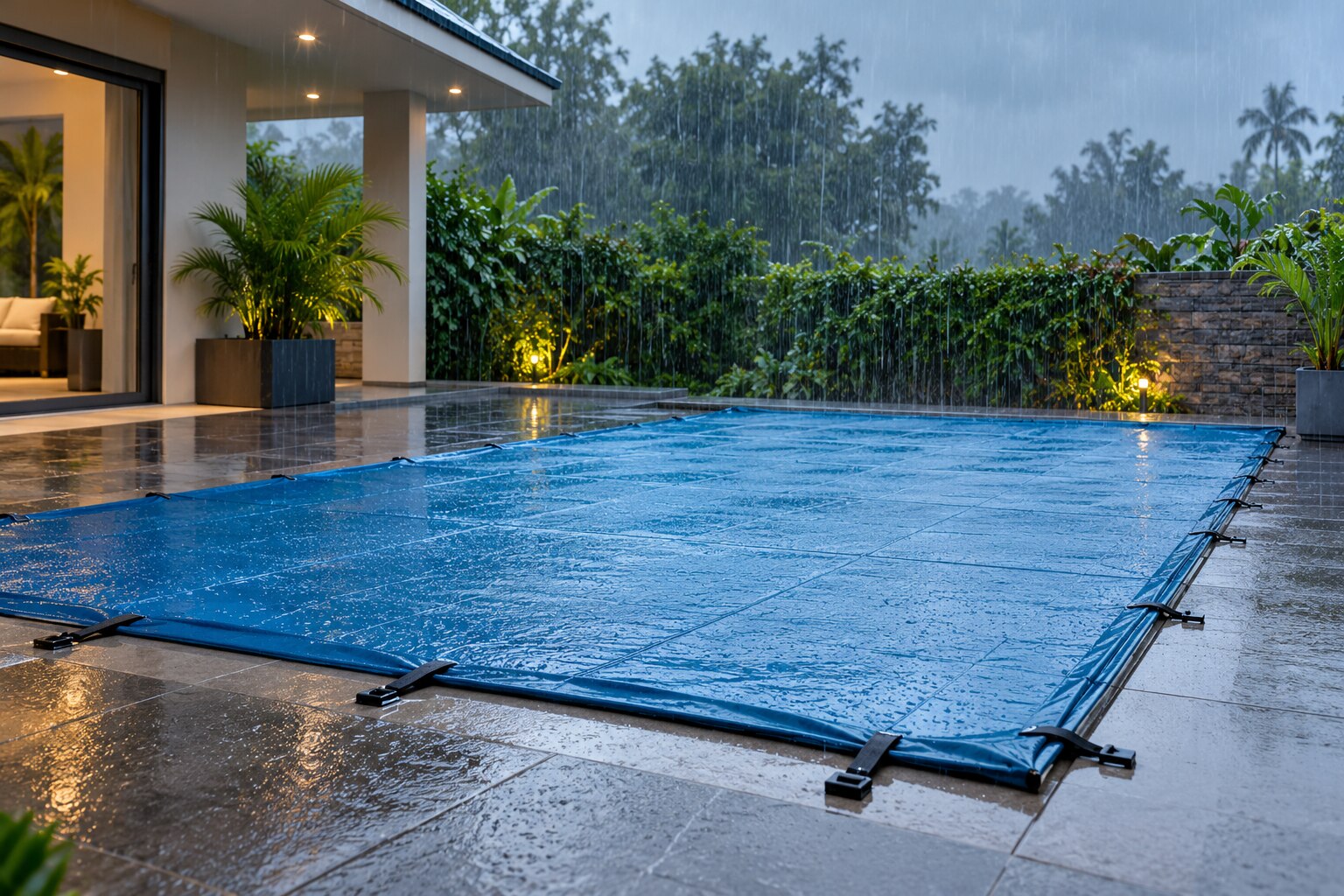
Heavy rain can overwhelm a blocked overflow, dilute disinfectant, carry muddy runoff into the water and flood pool equipment. By following a drainage-first inspection, protecting the shell and equipment, and testing only after debris and contamination are controlled, you can reduce damage and reopen the pool safely.
Key takeaways
- Clear every drain route to the approved discharge point before heavy rain.
- Keep water below coping without lowering it enough to risk hydrostatic damage.
- Use a secure cover and remove leaves, silt and contaminated runoff promptly.
- Switch off wet electrical equipment, then clean and rebalance water after storms.
Inspect every drainage route before the first heavy rain
Rainwater should move away from the pool, house and equipment room before it reaches the coping. To protect your home swimming pool for use during monsoon in Bengaluru, inspect the complete route from deck to approved discharge point, not only the visible drain grating.
1. Remove leaves, silt and cement residue from the pool overflow line, deck drains, rainwater outlets, pump-room floor drain and sump-pump inlet. Pour a bucket of water into each drain; slow drainage, rising water or backflow identifies a blockage.
2. Check that the deck slopes away from the pool and house. Settled paving can create a low spot where water ponds against coping, enters open joints and travels behind the pool shell or into the equipment room.
3. Trace every outlet to its discharge point. Do not connect pool overflow or deck runoff to a road drain, neighbouring property or foundation edge without confirming local storm-water requirements. An outlet that discharges onto soil beside the pump room can saturate the structure even when the drain itself is clear.
4. Test the sump pump by adding water to its pit, then confirm that the float switch starts it and the discharge pipe carries water away. Keep the pump-room threshold, cable entries and floor drain unobstructed.
5. Trim branches over the pool and clear the skimmer basket and pump strainer. This residential pool drainage monsoon check reduces leaf blockage before the first sustained rain.
After the inspection, photograph cracked sealant, open joints, repeated ponding and any breaker trip. Arrange an inspection before the storm if water already stands around the pool or equipment room.
Set the water level without creating hydrostatic damage
A Bengaluru storm usually does not justify draining a home pool. Keep the normal operating level if the overflow line is clear; if extra rain capacity is necessary, lower it by only 2 to 5 cm, while keeping water at least halfway up the skimmer opening.
1. Mark the normal level on the tile and record the current level. This gives you a real reference after the storm instead of relying on the waterline stain.
2. Check the overflow line before lowering anything. If it discharges freely to an approved point, let the pool accept rainfall rather than creating a larger deficit.
3. If the route is blocked or undersized, use a pump connected to a lawful discharge point and stop at the 2 to 5 cm reduction. Do not send chlorinated pool water into a road drain, neighbouring property or garden without confirming the permitted route.
4. Never drain the pool substantially before monsoon rain. Saturated soil can push against an empty or heavily lowered shell, causing lifting, cracks or movement; this is hydrostatic damage, not an overflow problem.
After the storm, restore the level gradually with clean water and inspect the shell, skimmer and pump operation. If the pool needs more than 5 cm of reduction, or already shows leaks or cracks, get a pool professional to assess groundwater relief and structure first. That caution belongs in monsoon pool care in Bengaluru.
Protect the pool from leaves, silt and contaminated runoff
Keep dirty rainwater off the pool deck and the pool itself; chemicals cannot undo silt, bird droppings or decomposing leaves after they enter. Before each major storm, confirm that the overflow line, skimmer throat, deck drains and nearby rainwater outlets accept water quickly rather than holding a puddle that can flow back into the pool.
- Prune branches overhanging the water, then remove leaves from the deck before rain begins. Falling litter adds organic load and can stain surfaces.
- Empty the skimmer basket and pump strainer frequently during wet weather. A blocked basket restricts circulation and sends debris toward the pump.
- Place a leaf net beneath the main cover when trees surround the pool. Lift it off carefully, empty it away from the pool, and never leave a waterlogged net resting on the surface.
- Keep soil, mulch and garden waste away from the pool edge. Use a raised kerb or cleanable strip where muddy landscaping meets the deck.
- Check the pump-room threshold, floor drain and sump inlet. Surface water entering the room can carry silt into equipment and flood electrical components.
A cover reduces leaves and chemical dilution, but it does not replace an overflow route. Remove water collecting on top, keep the cover’s drainage path clear, and use a properly secured pool cover rather than a loose tarpaulin.
Build home pool maintenance into your rainy season routine; after runoff enters the pool, stop circulation until the pump and electrical equipment are dry and safe.
Check waterproofing, coping and electrical equipment before the rains
Open joints, settled paving and cracked sealant are the defects most likely to send monsoon water behind the coping and into the pool structure. Inspect these boundaries before the first sustained rain; rigidly packing movement joints with cement mortar can crack again and reopen the water path.
Check pool waterproofing before monsoon at each vulnerable location:
- Construction joints, expansion joints and visible cracks
- Pipe penetrations, skimmer openings and light niches
- Corners, tile joints and the junction between coping and deck
- Settled pavers, open grout lines and failed flexible sealant
| Defect | What it causes | Correct response |
|---|---|---|
| Cracked joint or shell | Seepage behind finishes and unexplained water loss | Repair the joint or crack with a compatible flexible waterproofing system |
| Loose or hollow coping | Rainwater enters the deck edge and dislodges tiles | Re-bed the coping and reseal its movement joint |
| Flooded pump room | Motor damage and unsafe electrical operation | Dry the room, clear the drain and inspect equipment before energising |
| Tripping breaker or wet junction box | Shock and fire risk | Isolate power and have an electrician test the circuit, earthing and RCD |
Do not solve a leaking joint by recoating only the internal finish. That hides the symptom while water continues along the original path. Orenda Pools can help distinguish a finish failure from a shell, joint or penetration defect before repairs begin.
Run the pump only after the motor, control panel, cables and connections are dry. Arrange inspection if water loss exceeds normal evaporation, the equipment room floods, or the breaker trips repeatedly.
Related product
 | Swimming Pool Design and Build Swimming Pool Design and Build Orenda Pool is a premier swimming pool design and construction company in Bangalore, Karnataka, delivering bespoke pool solutions that combine... View product → |
Clean first, then test and balance the water after a storm
Do not pour chlorine into a rain-filled pool before testing it. Rain dilutes chemicals, while leaves, dust, bird droppings and contaminated runoff add organic demand; a large unmeasured dose can irritate swimmers and damage finishes.
Follow this sequence after heavy rain:
1. Keep swimmers out and switch off the pump if the motor, control panel, sockets or wiring are wet. Do not restart electrical equipment until it is dry and safe.
2. Remove leaves and floating debris with a leaf net. Empty the skimmer basket and pump strainer only after isolating the equipment from power.
3. Check the water level and look for silt, sewage-like odour, oily film or floodwater entry. Treat visible contaminated runoff as a reason to stop use and arrange a professional inspection.
4. Test pH, free chlorine and total alkalinity with a fresh liquid kit or a properly stored test kit. For general guidance, CDC targets pH 7.0–7.8 and at least 1 ppm free chlorine; follow your pool system’s specified set points when they differ.
5. Adjust pH first, then alkalinity and chlorine, using the measured result, pool volume and product label. Never mix chemicals or add them together.
6. Run filtration only when the equipment is dry, then retest before swimming. Clean the filter if pressure rises above its normal starting reading.
This home pool maintenance rainy season routine limits algae growth and prevents guesswork. Good monsoon pool care in Bengaluru also means testing again after another major storm, not assuming one treatment remains effective.
Frequently asked questions
How should you inspect residential pool drainage before Bengaluru monsoon?
Trace water from the deck, coping and equipment room to the approved discharge point. Clear blocked grates, channels and downpipes, and confirm water cannot flow toward the house or plant room.
What pool water level prevents monsoon damage?
Lower the pool only enough to accommodate expected rainfall while keeping hydrostatic pressure balanced. Do not empty an in-ground pool without professional advice because surrounding groundwater can lift the shell.
How can you keep leaves, silt and contaminated runoff out of a home pool?
Fit a secure pool cover, clear nearby vegetation and redirect roof runoff. After rain, remove floating debris first and stop muddy deck water from entering through open channels.
What should you check before monsoon reaches a pool?
Inspect waterproofing, coping joints, deck drains, expansion joints, pipe penetrations and the equipment-room roof. Keep pumps, controllers and switches dry, and isolate electrical equipment before cleaning flooded areas.
How do you restore pool water after a Bengaluru storm?
Remove debris and settled silt before testing. Check pH, free chlorine and water clarity, then balance the water and run filtration only after the equipment and electrical supply are safe.
Keywords